Phone:
(701)814-6992
Physical address:
6296 Donnelly Plaza
Ratkeville, Bahamas.

Phone:
(701)814-6992
Physical address:
6296 Donnelly Plaza
Ratkeville, Bahamas.
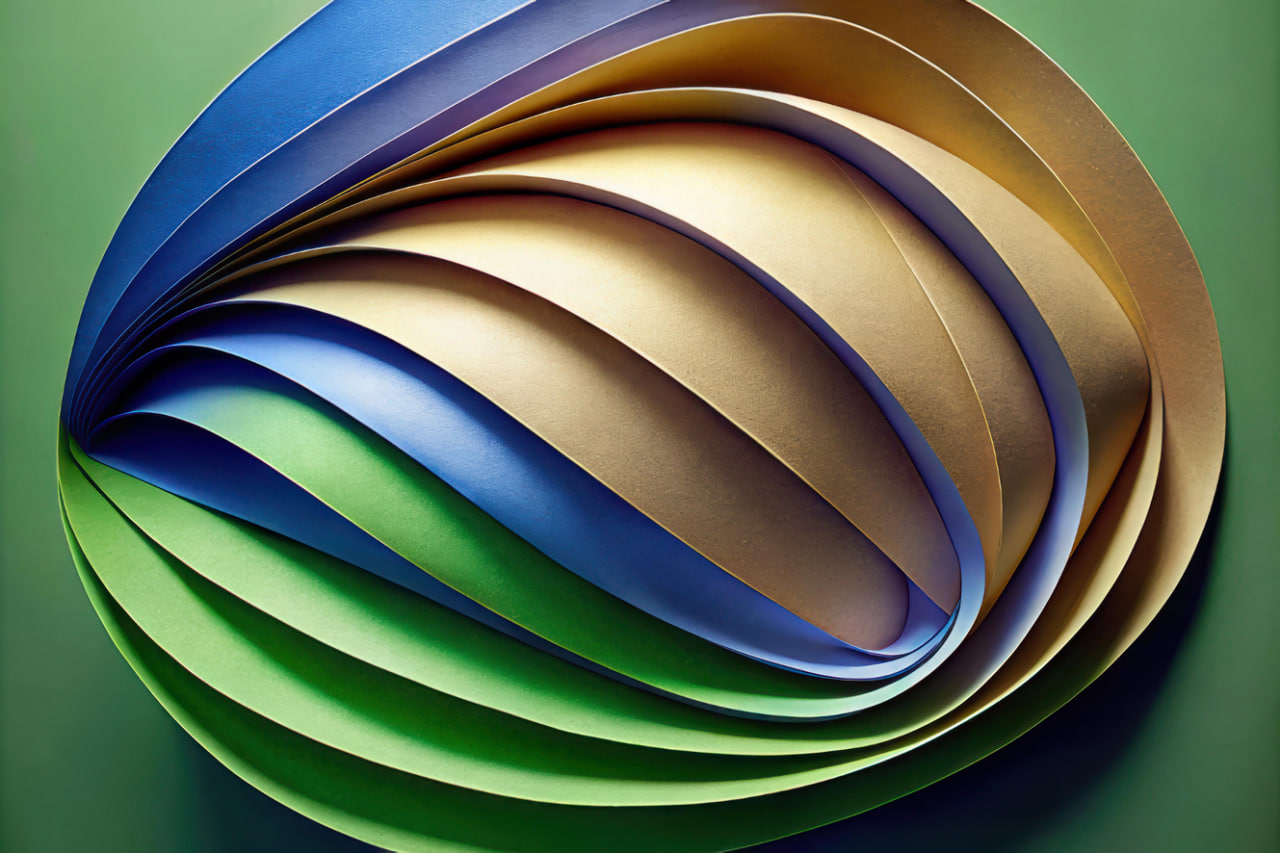
The material you choose to work with is just as important as your technique when it comes to paper sculpture. Paper isn’t as straightforward a medium as it seems, and its properties alter greatly depending on the paper’s weight, texture, and the way you treat it. By knowing how to select the right materials and tools for the job, paper sculptors can make deliberate decisions about how to treat their paper without restricting themselves unnecessarily, opening themselves up to even more creative possibilities.
In this book, I will cover the basic materials, equipment, and material selection techniques which are the basis for paper sculpture.
To better grasp the effects of paper usage, it’s helpful to know the distinctions between various paper products. Here are the definitions of some commonly used terms:
However, not all paper is created equal. Different paper varieties bring different properties, both in terms of structure and appearance, to the finished product.
Lighter papers are easy to bend and fold and therefore great for patterns with a lot of detail. Thicker papers hold their shape and are good for designs that require a bit of weight-bearing, or that require the creation of geometric shapes. Also consider the texture of the paper. If you want crisp folds, go with smooth paper. For more of a natural look, try textured paper.
Recycled and handmade papers may have fibers and inclusions that can influence folding and cutting. While these papers can add to the creative qualities of a piece, it is important to use them in such a way that they do not easily tear.
Paper Weight and Thickness
The weight of the paper is a measure of its strength and its ability to withstand any given amount of stress or manipulation. Thinner paper is much easier to fold, but will also hold its shape for a much shorter amount of time, whereas thicker paper is more resistant to folding, requiring more energy.
The thickness of the paper is something you will need to decide based on your project. A medium to heavy weight paper works best for structural components while lighter paper can be used for details or parts that don’t need to support anything. Of course, you can also use varying weights of paper on the same piece to create strong structures with finer details.
Doing tiny projects to test your paper can help you learn its boundaries before you start a big project.
GRAIN DIRECTION FIBER STRUCTURE:
Paper has a grain, and it makes a difference. Folding with the grain, you can get sharp, neat folds. Folding against the grain, the paper resists and buckles.
Knowing the orientation of the fibers also enables sculptors to prevent cracking and avoid unintended deformation of the piece, because folding or cutting with the grain (whenever feasible) preserves the integrity of the fibers and produces a neater outcome.
The grain direction is crucial when folding big sheets or making multiple folds.
Basic Cutting Instruments
Accuracy is essential in paper sculpture. It makes a nicer edge, and it is more durable.
With a craft knife, you can make very precise, small cuts, whereas a pair of scissors is good for more rounded, long cuts. Also, be sure the blades are sharp as you can tear the paper when you cut, and they dull easily so you may have to replace blades frequently.
A cutting mat helps to preserve your cutting surface and allows you to make clean cuts without any resistance.
Folding and Scoring
A scoring tool can be used to make sharp creases without breaking the paper. A bone folder, stylus or other blunt instrument, rounded tool can be used to make impressions on a fold prior to folding.
Scoring the paper takes a lot of the stress off the paper when folding, especially if you’re using cardstock or patterned paper. It also helps tools smooth out the paper and strengthen the fold.
These tools provide the necessary accuracy without damaging the paper.
Joining Techniques and Adhesives
In paper sculpture, adhesives are used in a subordinate capacity. Adhesives should not dominate the paper. Light adhesives allow for flexibility; heavier ones provide rigidity.
Less glue means less warpage, and it keeps surfaces free of mess. Often, tabs, slots, and interlocking folds enable you to eliminate the glue entirely.
Knowing how adhesives react to various papers can prevent staining and buckling.
Tools for Measurement and Planning
It is important for sculptors to be able to measure accurately in order to achieve balance and proportion. Rulers, grids, and templates are useful tools.
Sculptors can use sketches, drawings, and models to plan their project before completing it. This helps them save resources and helps to plan out any problems before they become a major issue.
Proper planning enhances both artistic vision and technical skill.
Environmentally friendly, alternative, or experimental materials
Inherently paper sculpture has ties to sustainability. You can make use of recycled paper, old boxes and any waste paper.